
Updated: Oct, 2026 | By Mr. David
Meta Title Optimization for Higher Click-Through Rates: The Complete SEO Guide
Your meta title is one of the first things people see when your page appears in Google and other search results. Meta title optimization is the process of creating clear, relevant, and compelling title tags that accurately represent a page while encouraging the right searchers to click.
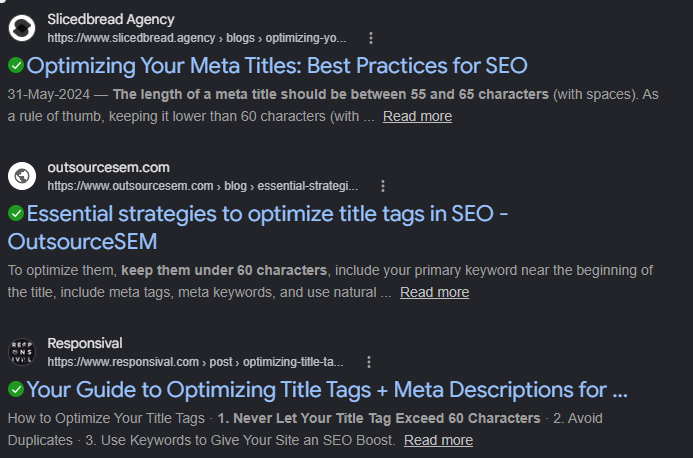
(Credit: Mr. David)
A strong title does more than place a keyword on the page. It connects the search query, search intent, page topic, value proposition, and brand in a format that is easy to understand at a glance. This becomes especially important as search results increasingly include richer features, AI-generated summaries, and other ways of discovering information. The goal is not to manipulate clicks, but to make the result genuinely useful and accurately set expectations.
In this guide, you’ll learn how to optimize meta titles for higher organic click-through rates (CTR), improve relevance and readability, avoid common title tag mistakes, and adapt your approach for traditional search and AI-driven search experiences. The guide also incorporates the stronger elements found across the reviewed competitor structures, including optimization workflows, examples, measurement, and practical checklists.
What is meta title optimization?
Meta title optimization is the process of improving a page’s HTML title tag so it clearly communicates the page topic, matches search intent, uses the primary keyword naturally, and gives searchers a compelling reason to visit the page. For higher CTR, a title should be concise, specific, readable, unique, and consistent with the actual page content.
Quick Answer: What Is Meta Title Optimization?
Meta title optimization is the practice of improving a page’s title tag so that it accurately describes the page, aligns with the user’s search intent, and gives people a clear reason to choose that result. A well-optimized title balances SEO relevance and human readability rather than simply inserting as many keywords as possible.
For higher click-through rates, the title should communicate the page’s main topic quickly, reflect what the searcher expects to find, and remain consistent with the content behind the result. The strongest approach combines the primary keyword, topic relevance, benefit or differentiator, and brand context when appropriate.
Table of Contents
ToggleOne-Sentence Definition
Meta title optimization is the process of refining a webpage’s HTML title tag to make it relevant to the target search query, clear to users, aligned with search intent, and compelling enough to encourage a qualified click from search results.
What is meta title optimization?
Meta title optimization means improving a webpage’s title tag so it clearly communicates the page topic, matches search intent, uses relevant keywords naturally, and presents a useful, compelling description of what the searcher will find after clicking.
What Makes a Meta Title Click-Worthy?
A click-worthy meta title is specific, relevant, concise, and easy to understand at a glance. It tells the searcher what the page covers while highlighting a useful benefit, result, format, or differentiator when one genuinely exists. It should create an accurate expectation rather than rely on exaggerated promises or clickbait. The title also needs to fit naturally with the page content, because a compelling title loses value when the destination page does not deliver what it suggests.
For example:
Weak: SEO Titles | SEO Tips
Stronger: Meta Title Optimization for Higher Click-Through Rates
The second version gives the searcher much more context about the topic and expected outcome.
Core Optimization Rules
Use these principles as the basic quality filter for every title:
Core Meta Title Optimization Rules
Keep the topic clear
Make the primary subject immediately understandable.
Match search intent
The wording should reflect whether the user wants information, a comparison, a review, a product, a service, or another specific outcome.
Use the primary keyword naturally
Include the main search term when it accurately represents the page, without repetition or keyword stuffing.
Lead with important information when appropriate
Place the most meaningful topic or keyword early enough that the core subject is visible quickly.
Communicate a useful value proposition
Use a benefit, outcome, differentiator, year, format, or other meaningful modifier when it helps the searcher distinguish the result.
Make every title unique
Avoid using the same title across multiple pages.
Keep the wording human-readable
Write natural language that makes sense before considering keyword placement.
Keep the title consistent with the page
The title should accurately represent the content users reach after clicking.
These principles reflect the recurring optimization themes across the supplied competitor material, particularly relevance, keyword placement, uniqueness, search-intent alignment, readability, and CTR-focused title writing.
Can an optimized meta title improve organic click-through rate?
An optimized meta title can improve the likelihood of a click by making a search result more relevant, understandable, and appealing to the intended audience. CTR still depends on factors such as search position, query intent, competing results, SERP features, and the quality of the overall result.
Quick Meta Title Formula
A useful starting formula is:
Primary Topic + Search Intent or Benefit + Differentiator + Brand
For example:
Meta Title Optimization for Higher CTR | BlogsInfo
The formula is a framework rather than a rule that every page must follow. Some titles work better without a brand name, while others need a specific modifier such as 2026, Guide, Review, Comparison, Pricing, Best, or How-To. Choose the elements that make the result more useful and distinctive for the actual query.
Use a simple callout/card containing:
FormulaPrimary Topic + Intent/Benefit + Differentiator + Brand
ExampleMeta Title Optimization for Higher CTR | BlogsInfo
What Is a Meta Title and How Is It Different From an H1?
A meta title, commonly referred to as a title tag or HTML <title>, is the page title defined in a webpage’s HTML. It is used as a key title signal for the page and commonly appears as the clickable headline in organic search results. An H1, by contrast, is the primary visible heading presented within the webpage itself.
Although the two can communicate the same main topic, they serve different roles. The title tag is designed for the search result and document identification, while the H1 helps users understand the page after they arrive. Keeping both closely aligned with the page topic and search intent creates a clearer connection between the search query, SERP result, and on-page content. The supplied competitor material also treats the relationship between title tags and H1 headings as an important optimization consideration.
What Is a Meta Title / HTML Title Tag?
A meta title is the SEO-facing name commonly used to describe a webpage’s HTML <title> element. Unlike a visible heading placed inside the page body, the title tag belongs to the document metadata and helps describe the page in search results, browser tabs, and other contexts that use the document title.
For SEO, the title should communicate the page’s main topic, primary keyword or entity, and intended value as clearly as possible. A strong title is specific enough for both searchers and search systems to understand what the page is about without becoming repetitive or stuffed with keywords.
For example:
Title tag: Meta Title Optimization for Higher CTR | BlogsInfo
This immediately identifies the subject and the intended outcome while remaining concise and readable.
What is a title tag in SEO?
A title tag is the HTML <title> element that defines a webpage’s document title. It commonly supplies the title shown as the clickable result in search engines and also appears in browser tabs and other interfaces that display a page title.

(Credit: Mr. David)
Meta Title vs H1
A meta title and H1 should usually describe the same central topic, but they are not interchangeable elements.
The meta title is part of the page’s HTML metadata and is primarily concerned with how the document is represented outside the main body of the page. The H1 is a visible heading within the content and helps visitors understand what the page covers once they arrive.
They can be identical, similar, or slightly different depending on the page and the way you want to communicate its value. The important principle is alignment, not forced duplication. Both should accurately represent the same search intent and avoid creating a mismatch between the search result and the page content.
For this article:
Meta title: Meta Title Optimization for Higher CTR | BlogsInfo
H1: Meta Title Optimization for Higher Click-Through Rates: The Complete SEO Guide
The wording differs, but the subject and intent remain consistent.
Should your meta title and H1 be the same?
No. A meta title and H1 do not have to use identical wording. They should, however, remain closely aligned in topic, intent, and meaning so users and search systems receive a consistent description of the page.
Meta Title vs Meta Description
The meta description is different from both the title tag and H1. It provides a longer summary of the page and is commonly displayed beneath the title in search results when Google chooses to use it.
The three elements therefore work together:
- Meta title: identifies the page and provides the main search-result headline.
- Meta description: expands on the page’s value and gives additional context.
- H1: identifies the main subject within the webpage itself.
A useful way to think about them is headline → supporting promise → on-page topic. They should communicate a consistent message rather than repeating the same sentence three times.
Meta Title, Meta Description and H1: What Each Element Does
| Element | Where It Lives | Main Purpose | Primary Audience |
|---|---|---|---|
| Meta title / title tag | HTML document metadata | Identify and represent the page in search and other title-based interfaces | Searchers and search systems |
| Meta description | HTML document metadata | Summarize the page and communicate additional context or value | Searchers |
| H1 | Visible page content | Identify the main topic or subject of the webpage | Page visitors and search systems |
Where the Title Appears in Search Results
In a typical organic result, the title tag commonly contributes the clickable headline that a searcher sees first. It may be accompanied by the URL or breadcrumb information and a search-result description. The exact presentation can vary because Google may adjust the displayed title based on the query, page content, and other contextual signals.
This makes the title particularly important from a SERP visibility and CTR perspective. Searchers often scan the result page quickly, so the title should make the topic and relevance obvious without requiring them to decode vague wording.
The title should also make an accurate promise. Strong CTR optimization is not simply about attracting more clicks; it is about attracting qualified clicks from users whose expectations match the page.
Why Google May Rewrite the Displayed Title
The title you specify is not always the exact title a searcher sees in Google. Google can generate or adjust the displayed title when it determines that another version may better represent the page or better match the search context.
Common situations include titles that are too vague, overly repetitive, inaccurate, outdated, excessively long, or poorly aligned with the visible page content. Google may also draw wording from prominent on-page text when it considers that wording a more useful representation of the document.
For that reason, title optimization should not be treated as a simple character-count exercise. A strong title needs to agree with the H1, page topic, main content, search intent, and overall document context.
EEAT treatment: Avoid claiming that a particular character count, keyword position, or formula guarantees that Google will display your exact title. Frame these as optimization practices rather than absolute search-engine rules.
Can an optimized meta title improve organic click-through rate?
An optimized meta title can improve the likelihood of a click by making a search result more relevant, understandable, and appealing to the intended audience. CTR still depends on factors such as search position, query intent, competing results, SERP features, and the quality of the overall result.
Final Takeaways
Meta title optimization is ultimately about making the search result more useful, understandable, and relevant to the person who sees it. The strongest titles connect the primary topic, search intent, value proposition, and page content without relying on keyword stuffing or exaggerated claims.
Rather than searching for one “perfect” title formula, treat optimization as a repeatable process: understand the query, write for the intended audience, review the SERP, publish, and measure what happens. This reflects the practical emphasis found in the supplied competitor material around relevance, concise titles, user engagement, optimization workflows, and measurement.
The Core Principles to Remember
A strong meta title should be clear, specific, relevant, unique, readable, and aligned with search intent. Use the primary keyword naturally when it accurately represents the page, communicate a genuine benefit, and keep the most important information easy to understand.
Your title should also remain consistent with the H1 and actual page content. For AI and generative search, prioritize clear entities, semantic context, and accurate relationships between the query, topic, and document rather than adding AI-related keywords without relevance.
What makes a meta title well optimized?
A well-optimized meta title clearly identifies the page topic, matches search intent, uses relevant wording naturally, communicates useful value, remains unique and readable, and accurately represents the content users will find after clicking.
What to Optimize First
When prioritizing title improvements, start with pages that already have meaningful search visibility but appear to have communication gaps. Use Google Search Console to review queries, impressions, clicks, CTR, and average position, then inspect the relevant SERP and compare the title with the page’s actual intent and content.
Fix the biggest clarity or relevance problems first: generic wording, intent mismatch, duplicate titles, misleading promises, or unnecessary keyword repetition. This approach is more useful than changing every title simply to make them shorter or more keyword-focused.
Continuous Optimization Strategy
Meta title optimization works best as an ongoing cycle:
Research → Write → Publish → Measure → Refine
Search behavior, competitors, content, and SERP presentation can change, so revisit important titles when the evidence indicates an opportunity. Measure qualified organic clicks and relevant query performance, not CTR alone, and avoid assuming that every change in performance was caused by the title.
For GEO and AEO, keep the same foundation: clear topic, identifiable entity, explicit context, accurate answers, and strong alignment between the title and the underlying content.
The objective is not to chase every new SEO tactic. It is to keep making your search result a more accurate and useful representation of the page.
How often should you optimize existing meta titles?
Review important meta titles periodically and whenever search-performance data shows a clear opportunity. Prioritize titles with meaningful impressions or query visibility, then update them when intent, relevance, content scope, or SERP competition suggests that a clearer title could better represent the page.
Frequently Asked Questions (FAQ)
Meta title optimization can raise practical questions because a title has to satisfy several objectives at once: it should communicate the page topic, search intent, value, and relevance while remaining concise and readable in search results. The most useful FAQ section therefore answers both basic and advanced questions, including title tags versus H1s, keyword placement, CTR, Google rewrites, AI search, testing, and large-scale auditing. These themes also reflect the recurring FAQ and optimization topics present in the supplied competitor material.
Meta Title Fundamentals and Page Structure
This category covers the fundamentals readers need before optimizing titles: what a meta title actually is, how it differs from other page elements, and how title tags fit into the broader structure of a webpage. These answers establish the terminology needed to understand the more advanced optimization questions later in the FAQ section.
What is meta title optimization?
Meta title optimization is the process of improving a webpage’s HTML title tag so that it clearly communicates the page topic, aligns with the user’s search intent, uses relevant terminology naturally, and gives the searcher a useful reason to consider the result. The objective is not simply to insert a keyword, but to create an accurate connection between the search query, title, page content, and user expectation while keeping the wording concise and readable.
What is a title tag in SEO?
A title tag is the HTML <title> element that defines the document’s title. It commonly contributes the headline displayed for a webpage in organic search results and also appears in browser tabs and other interfaces that use the document title. For SEO, the title should clearly represent the page’s main subject and remain consistent with the H1 and the actual content rather than being written as a disconnected keyword string.
What is the difference between a meta title, title tag, and SEO title?
In practical SEO discussions, meta title, title tag, and SEO title are often used to describe the same or closely related concept: the title specified for a webpage’s HTML document. “Title tag” is the more technically precise term because the element is the HTML <title> element, while “SEO title” and “meta title” are common industry terms used in SEO tools and content management systems.
Should my meta title and H1 be the same?
No. A meta title and H1 do not have to use identical wording, although they should normally communicate the same central topic and search intent. The title tag is primarily used to represent the document in places such as search results, while the H1 is the main visible heading on the page. Similar wording can create consistency, but forced duplication is not necessary.
How is a meta title different from a meta description?
The meta title primarily identifies the webpage and commonly supplies the main clickable headline shown in search results, while the meta description provides additional explanatory context about the page. Think of the relationship as headline → supporting context → page content. They should work together without simply repeating the same sentence, and both should accurately reflect what the user will find after visiting the page.
Length, Keywords, and Title Formatting
This category addresses one of the most common areas of confusion in meta title optimization: how long a title should be, where keywords belong, and whether numbers, dates, brackets, and brand names actually help. The emphasis is on practical optimization rather than rigid character rules.
How many characters should a meta title have?
There is no universal character count that guarantees a title will display completely in every search situation. A practical working range is often around 55–60 characters, but character count should be treated as a guideline rather than a hard Google rule. The more important priorities are topic clarity, search-intent alignment, readability, and making sure the most important information appears early enough to remain useful if the display is shortened.
Is pixel width more important than character count?
Pixel width is a useful additional check because different characters consume different amounts of horizontal space. Two titles with the same number of characters can occupy different widths, so a character-only approach can be misleading. Use character count for rough editing and pixel-width previews for presentation, but do not let either replace the more important work of making the title relevant, specific, readable, and aligned with the searcher’s intent.
Where should the primary keyword appear in a meta title?
When the primary keyword accurately represents the page, placing it relatively early can make the topic clear quickly, especially when users are scanning several search results. However, there is no need to force the exact keyword into the first position in every title. Natural language, relevance, search intent, and readability should take priority over rigid keyword-position rules.
Should every page have a unique meta title?
Yes, important pages should generally have titles that are unique enough to distinguish their individual topic and purpose. Using the same or nearly identical title across multiple URLs can make it harder for users and search systems to understand which page serves which intent. Uniqueness does not mean every title needs completely different wording; it means the title should accurately identify the specific page it represents.
Should I include my brand name in every meta title?
Not necessarily. A brand name can help recognition, particularly for established businesses, publishers, SaaS companies, and e-commerce brands, but it should not consume so much space that the main topic becomes unclear. For many content pages, placing the brand at the end is a practical approach, while homepage titles may reasonably give the brand a more prominent position.
Do numbers, brackets, and dates improve CTR?
They can make a title more specific and scannable when they communicate information that genuinely matters to the searcher. For example, a number can indicate the scope of an article, brackets can identify useful content such as “Checklist” or “Examples,” and a year can indicate a relevant time frame. None of these elements guarantees a higher CTR; they work best when they accurately describe the content behind the result.
CTR, Search Intent, and User Expectations
This category focuses on the main business outcome behind title optimization: helping the right searchers recognize relevance and choose the appropriate result. These answers also clarify why CTR should be interpreted in context rather than treated as an isolated ranking metric.
Why does meta title optimization matter for click-through rate?
The title is often one of the first pieces of information a searcher evaluates in an organic result, so it can influence whether the result appears relevant enough to investigate. A clear title can communicate the topic, intent, benefit, and differentiation quickly. However, CTR is also affected by ranking position, SERP features, competition, device, query type, and brand familiarity, so title optimization should be viewed as improving result communication rather than guaranteeing a particular CTR increase.
Can an optimized meta title directly improve Google rankings?
An optimized title should help communicate the page’s subject and relevance, but it should not be presented as a guaranteed direct ranking boost. Search rankings depend on many broader factors, including the quality and relevance of the page, competition, and the overall search context. A responsible SEO strategy therefore optimizes titles for clarity and user usefulness, rather than promising that a particular keyword placement or formula will automatically move a page higher.
How does search intent affect a meta title?
Search intent determines what the searcher expects the page to help them accomplish, whether that means learning something, comparing options, evaluating a product, finding a service, or taking an action. A title should reflect that purpose. For example, a comparison query may benefit from “A vs B,” while an informational query may need “How to,” “Guide,” or “What Is.” The wording should follow the actual intent instead of forcing the same formula onto every page.
What makes a meta title more clickable without using clickbait?
A stronger title usually combines specificity, relevance, a clear benefit, and accurate differentiation. It should tell the searcher what the page is about and why it may be useful without hiding essential context. Curiosity can be effective when it highlights a real question, problem, or insight covered by the page, but exaggerated promises or sensational wording can create an expectation mismatch.
What happens if my meta title is too long or too short?
A title that is unnecessarily long can bury the most important information and may be shortened in the visible search-result presentation. A title that is extremely short may fail to communicate enough context to distinguish the page from competing results. The objective is therefore not to hit an exact character number, but to provide enough information to establish topic, intent, and value while removing unnecessary wording.
How often should I update an existing meta title?
There is no universal update schedule. Review important titles when search-performance data reveals an opportunity, when the page’s content or search intent changes, when the SERP evolves, or when the current wording no longer represents the page accurately. Updating titles simply to make them appear “fresh” is not necessary; changes should have a clear reason and should be followed by measurement.
AI Search, AEO, and GEO
This category addresses how meta titles fit into newer discovery environments such as AI Overviews and generative search. The key principle is context: optimize for clear entities and useful information rather than trying to manipulate one specific AI platform.
Do meta titles still matter as search becomes more AI-driven?
Yes, but their role should be understood as part of a broader content and discovery system. A clear title still helps identify the page’s subject and provides context around the document, even when users encounter AI-generated summaries or conversational search experiences. An effective future-facing approach is therefore to maintain accurate, context-rich, intent-aligned titles rather than assuming that traditional search principles have become irrelevant.
Do meta titles directly determine whether a page appears in Google AI Overviews?
No. An optimized title does not guarantee inclusion in an AI Overview. The title can contribute to topic clarity and document context, but AI-generated search experiences depend on the broader information and relevance of the source. This is why the title should remain aligned with the H1, page content, entities, search intent, and overall topical context rather than being treated as a standalone AI-visibility tactic.
Should I add AI, ChatGPT, Gemini, or generative-search keywords to my meta title?
Only when those terms accurately describe the page. Adding “AI,” “ChatGPT,” “Gemini,” or “generative search” to an unrelated title does not make it more optimized for AI discovery and can create a misleading expectation. GEO works better when the page clearly establishes its main entity, topic, relationships, and context throughout the document rather than forcing AI-related terminology into titles where it does not belong.
How do entities and semantic SEO affect meta title optimization?
Entities and semantic SEO help establish what the page is actually about and how its concepts relate to one another. For a page about meta title optimization, relevant concepts might include title tag, HTML title, search intent, SERP, organic CTR, H1, meta description, and AI search. The title should identify the primary subject clearly, while the broader content establishes related entities and relationships without turning the title into a list of keywords.
Does meta title optimization guarantee visibility in ChatGPT, Gemini, or Perplexity?
No. There is no basis in the supplied material for treating a meta title as a guarantee of visibility in any particular generative platform. A better approach is to make the document clear, self-contained, semantically coherent, and factually accurate, so that its topic and relationships are understandable when a search or answer system retrieves information from it.
Auditing, Testing, and Troubleshooting Meta Titles
This category covers the practical side of ongoing optimization: identifying weak titles, interpreting search data, testing changes, and diagnosing situations where the result does not behave as expected. The emphasis is on evidence rather than assumptions.
How do I find pages with low CTR for meta title optimization?
Google Search Console is a practical starting point because it lets you examine queries, impressions, clicks, CTR, and average position for pages appearing in Google Search. Look for pages that receive meaningful impressions but appear to have weaker-than-expected CTR, then investigate the actual queries and SERP context before deciding that the title is responsible. Low CTR alone does not prove a title problem because ranking position and SERP features can strongly influence click behavior.
What should I do if my title ranks well but gets a low CTR?
First, do not immediately rewrite it. Review the actual search queries, average position, competing results, SERP features, and the wording used by the current title. If the page has strong visibility but the title does not clearly communicate the relevant topic, intent, or value, a revision may be justified. The better diagnosis is “strong visibility + weak result communication”, rather than assuming that every low CTR is caused by the title.
Why does Google rewrite my meta title?
Google may display a title that differs from the HTML title when it determines that another representation better describes the page or fits the search context. This is one reason the title should remain consistent with the H1, prominent page text, main topic, and actual content. Writing a clear, accurate, context-rich title gives you a stronger starting point than trying to force a particular display through keyword repetition or artificial wording.
How can I test whether a new meta title performs better?
Create a clear hypothesis before changing the title, record the original wording and relevant performance data, then compare the revised result using appropriate search queries, impressions, clicks, CTR, and position. Avoid treating a change in CTR as proof of causation because rankings, competitors, SERP features, seasonality, and query mix can also change. A controlled approach produces more useful SEO information than repeatedly changing titles without documenting the experiment.
How long should I wait before judging a title change?
The supplied competitor material supports measuring title performance, but it does not provide a universal waiting period that applies to every website or query. In practice, the comparison should be based on enough relevant search exposure to make the data meaningful, while accounting for changes in ranking, query mix, and SERP conditions. The important principle is to compare consistent signals over a sensible period, not to declare success or failure immediately.
What are the most common meta title optimization mistakes?
Common problems include keyword stuffing, duplicate titles, vague wording, missing search intent, misleading clickbait, unnecessary length, excessive branding, and writing primarily for search engines instead of people. Another mistake is applying one rigid formula to every page type. Strong optimization is more flexible: the title should reflect the specific page, its target audience, the query’s intent, and the value the content genuinely provides.