
Updated: Oct, 2026 | By Mr. David
How Google Business Profile Categories Impact Rankings
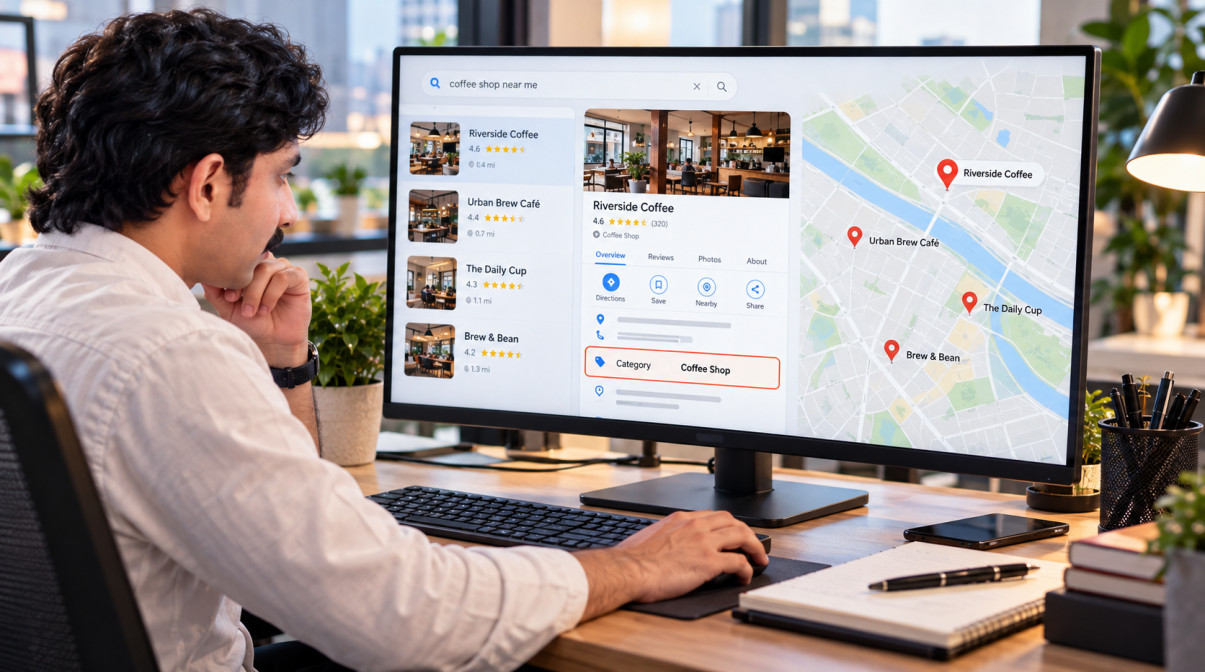
Google Business Profile categories help Google understand what your business is and which local searches may be relevant to it. Your category selection can influence how Google interprets your business, connects it with search intent, and determines when your profile may be relevant in Google Search and Google Maps.
(Credit: Mr. David)
The primary category describes the main type of business you operate, while secondary categories can provide additional context about relevant offerings. However, categories are not an isolated ranking factor. Local visibility also depends on signals such as relevance, distance, prominence, reviews, business information, website content, services, and local authority.
That makes category selection more than simply choosing the closest label from Google’s list. The goal is to accurately represent your business, match the searches you genuinely serve, and create a consistent connection between your Google Business Profile, website, services, and local search presence.
Google Business Profile categories can affect local rankings because they help Google understand what type of business you are and how relevant your profile is to a local search. The primary category establishes your core business type, while relevant secondary categories can add context. Categories work alongside distance, prominence, reviews, website signals, and other local ranking factors.
Google Business Profile Categories: What They Are and Why They Matter
Google Business Profile categories are predefined business classifications that help Google understand the type of business represented by a profile. They provide important context for local search, Google Maps, search relevance, and business discovery. Choosing categories accurately can therefore help connect a business profile with searches that genuinely match what the business offers.
Table of Contents
ToggleWhat Are Google Business Profile Categories?
Google Business Profile categories are standardized labels used to describe what a business is. They help distinguish one business type from another, such as a dentist, restaurant, real estate agency, department store, plumber, or financial service. Google uses the category information as part of its understanding of a business and its relevance to local searches.
What are Google Business Profile categories?
Google Business Profile categories are predefined labels that tell Google what type of business you operate and help provide context for matching your profile with relevant local searches.
The goal is not to insert every possible business term. The category should accurately represent the business’s actual identity and core offering.
Why Categories Matter for Local Search
Category selection matters because relevance is a central part of local search. A clear, accurate category gives Google stronger context about the business when interpreting a user’s search and comparing potentially relevant local businesses. This can affect where a profile is considered relevant across Google Search and Google Maps, although category selection does not operate independently of other local SEO signals such as distance, prominence, reviews, website relevance, and business information.
Why do Google Business Profile categories matter for local SEO?
They matter because categories help Google understand a business’s type and relevance, which can contribute to matching the profile with appropriate local searches. They are one part of a broader local ranking system rather than a standalone ranking guarantee.
Primary vs Supporting Business Information
Your category is only one part of the business information Google uses to understand a profile. The primary category communicates the main business type, while other profile elements—such as services, attributes, products, business description, website content, and reviews—provide additional context. The strongest profile strategy keeps these signals consistent rather than treating category selection as a standalone optimization tactic.
How Google Business Profile Categories Impact Local Rankings
Google Business Profile categories primarily help establish business relevance: they give Google context about what a business is and which searches may relate to it. But local rankings are not determined by categories alone. Distance, prominence, reviews, website relevance, business information, and other local signals also contribute to how a business appears in Google Search and Google Maps.
Categories and Google's Local Ranking Framework
A useful way to understand category impact is to look at the three commonly discussed dimensions of local ranking: relevance, distance, and prominence. Category selection has its clearest connection with relevance because it helps describe the business type Google is evaluating. Distance and prominence operate alongside that relevance, which is why changing a category cannot automatically overcome a location disadvantage or a weaker overall local presence.
Relevance
Relevance is the strongest reason category selection matters. When your primary category accurately describes your business, it gives Google a clearer signal about the type of search intent your profile can satisfy. Relevant secondary categories can add context for genuinely related offerings, helping Google better connect your business entity, services, and local search queries.
How do GBP categories affect relevance?
GBP categories affect relevance by helping Google understand what type of business a profile represents and whether that business is a suitable match for a particular local search.
Distance
Distance is separate from category selection. A highly relevant category does not make a business physically closer to the searcher. Local results can therefore vary according to the user’s location or the location associated with the search. Category optimization should be treated as a relevance strategy, not a substitute for geographic proximity.
Prominence
Prominence reflects the broader strength and recognition of a business in Google’s local ecosystem. Factors discussed throughout the competitor material include reviews, citations, website signals, local links, and overall online presence. A well-chosen category can clarify relevance, but it does not replace the work required to build a credible and prominent local business presence.
How Categories Can Affect Google Maps and Local Pack Visibility
Categories can influence whether Google considers a business relevant to searches that are closely related to its business type. That relevance can matter across Google Maps and the Local Pack, where businesses are selected for particular local queries. However, visibility is query-specific and depends on the wider local ranking context. A category change should therefore be evaluated alongside distance, prominence, reviews, website relevance, and other profile signals, rather than judged by position alone.
Do Google Business Profile categories affect Google Maps visibility?
Yes, categories can contribute to Google’s understanding of business relevance for local searches, which can influence whether a profile is considered for relevant Google Maps and Local Pack results. They are one part of the broader local ranking system.
Why Categories Are Only One Part of Ranking
A category should never be treated as a shortcut to higher rankings. A profile can have an accurate category and still struggle because of distance, limited prominence, weak reviews, inconsistent business information, poor website relevance, or other local SEO limitations. The practical goal is to make every important signal tell the same story: what the business is, where it serves customers, what it offers, and why it is relevant to the search.
Primary vs Secondary Google Business Profile Categories
Google Business Profile uses a primary category to describe the main type of business, while secondary categories provide additional context about other relevant aspects of the business. Understanding this distinction helps you build a category structure that reflects your actual business rather than trying to maximize the number of categories on the profile.
What Is the Primary Category?
The primary category is the main business classification attached to your Google Business Profile. It should represent the core business identity and the main service or product customers associate with the business. Because it establishes the central context of the profile, the primary category should be selected for accuracy, specificity, and search relevance, rather than simply choosing a broad category with more potential search terms.
What is the primary category on a Google Business Profile?
The primary category is the main business classification that tells Google what type of business the profile represents. It should closely match the business’s core offering and identity.
What Are Secondary Categories?
Secondary categories are additional business classifications that describe other genuine and relevant aspects of the same business. They can provide Google with more context when a company serves multiple closely related customer needs. They should complement the primary category rather than introduce unrelated services, speculative offerings, or categories chosen solely because competitors use them.
Primary Category vs Secondary Categories
The practical difference is simple: the primary category defines the core business type, while secondary categories add supporting context. Treat the primary category as the strongest expression of business identity and secondary categories as relevant extensions of that identity. This distinction is reflected across the competitor material covering category selection and optimization.
Primary vs Secondary Google Business Profile Categories
| Element | Primary Category | Secondary Categories |
|---|---|---|
| Primary purpose | Defines the core business type | Adds relevant supporting context |
| Selection priority | Highest priority | Supporting priority |
| Business identity | Represents the main identity | Represents additional relevant aspects |
| Optimization approach | Choose the most accurate and specific match | Include only genuinely relevant categories |
Should You Add Every Relevant-Looking Category?
No. A category should be included because it accurately represents the business, not simply because it appears related to a keyword or competitor profile. Adding loosely related categories can weaken the clarity of your business entity and search relevance. A better approach is to maintain a focused category set that reflects real offerings customers can find on your profile and website.
Should you add every possible secondary category to your Google Business Profile?
No. Add secondary categories only when they accurately describe genuine, relevant aspects of the business. More categories are not automatically better.
Google Business Profile Category Optimization Checklist
Use this checklist before and after optimizing your Google Business Profile categories. It brings the article’s core recommendations together so you can verify business relevance, category accuracy, secondary-category selection, search intent, website consistency, and ongoing performance without turning category optimization into a keyword-stuffing exercise.
Before Selecting a Category
Start with the business itself. Confirm what the company actually does, identify its core offering, understand the relevant local search intent, and research appropriate category options before changing the profile.
What should I check before choosing a Google Business Profile category?
Check the business’s core offering, business identity, relevant search intent, available category options, and whether the selected category would accurately represent the real business.
During Optimization
During optimization, keep the category structure focused and factual. Select the primary category that best represents the business and add secondary categories only when they describe genuine, relevant aspects of the same operation.
GBP Category Optimization Checklist
✓ Choose the most accurate primary category
✓ Add only relevant secondary categories
✓ Avoid irrelevant or loosely related categories
✓ Do not use categories as a substitute for services
✓ Avoid category stuffing
✓ Keep categories consistent with the website and GBP services
✓ Check that the profile still describes one coherent business entity
After Optimization
Optimization does not end when you save the profile. Review the updated information for accuracy, then monitor relevant local-search performance and customer actions. Reassess the category strategy when the business, services, or operating focus materially changes.
What should I do after optimizing my GBP categories?
Verify the profile information, monitor relevant local visibility and customer actions, record meaningful changes, and reassess the categories when the business or its core offerings materially change.
Post-Optimization GBP Category Checklist
✓ Recheck the published profile information
✓ Confirm category and website consistency
✓ Monitor relevant Google Maps and Local Pack visibility
✓ Review relevant search queries
✓ Track meaningful profile interactions and customer actions
✓ Record category changes for future comparison
✓ Reassess categories when the business materially changes
Frequently Asked Questions (FAQ)
Google Business Profile categories can raise practical questions about ranking relevance, primary and secondary categories, services, category selection, Google Maps visibility, profile changes, and AI-powered search. The questions below bring the article’s key points together in one place, with each answer written as a complete explanation rather than a brief two-line response. The competitor material also repeatedly focuses on category selection, changing categories, category availability, services, Google Maps visibility, and the relationship between categories and broader local SEO.
Understanding Google Business Profile Categories
This section explains what GBP categories represent and how they fit into the broader information Google receives about a local business.
What are Google Business Profile categories?
Google Business Profile categories are predefined labels used to describe the type of business represented by a profile. They help establish the business’s identity and provide context for Google’s understanding of the listing in local search. For example, a business may be classified according to its core business type rather than simply according to one of the many services or products it offers. Because categories are meant to represent the actual business, the selection should reflect what the company genuinely is and does. Categories should therefore be treated as business classifications, not as a place to insert every keyword the business wants to target.
Why do Google Business Profile categories matter for local SEO?
Categories matter because they provide Google with information about what type of business a profile represents and therefore contribute to the profile’s relevance to appropriate local searches. Their role is most closely connected with relevance, but categories are not the only factor involved in local visibility. Other considerations discussed throughout local SEO include distance, prominence, reviews, website information, services, business details, and broader local signals. A category is therefore best viewed as one component of a larger local search system rather than a standalone method for improving rankings.
What is the primary category on a Google Business Profile?
The primary category is the main business classification associated with a Google Business Profile. It should communicate the business’s central identity and the core offering that most accurately describes the operation. Choosing the primary category requires more than selecting a broad term that sounds relevant; it should be a genuine representation of the business. When several services exist, the primary category should still reflect the principal business identity, while supporting information and relevant secondary categories can be used to provide additional context.
What are secondary Google Business Profile categories?
Secondary categories are additional business classifications that provide supporting context beyond the primary category. They are useful when a business legitimately operates across more than one closely related area and those additional categories accurately describe what the business does. They should not be treated as a list of every conceivable service or related keyword. The most useful secondary categories are those that have a genuine relationship with the actual business, its offerings, and its customer needs. In other words, secondary categories should broaden accurate business context without making the profile less focused.
How many Google Business Profile categories can I add?
The number of categories should not be treated as the main optimization target. What matters more is choosing an accurate primary category and adding only the secondary categories that genuinely represent the business. Adding categories simply to use more of the available capacity can create an unnecessarily broad or unclear profile. The supplied competitor material also emphasizes relevant category selection and avoiding category stuffing rather than treating category quantity as the objective.
Choosing the Right GBP Categories
These questions focus on the practical process of selecting categories based on business identity, search intent, competitor research, services, and location structure.
How do I choose the right Google Business Profile category?
Start with the business itself rather than starting with keywords. Identify the core product, service, or business function that defines the company, then look for the most accurate and specific category available in Google’s category system. After that, consider relevant search intent, comparable local businesses, appropriate secondary categories, and consistency with the website and GBP services. A good category choice should make sense from both the business owner’s perspective and the customer’s perspective. The goal is not to choose the category that simply sounds most attractive for SEO, but the one that best represents the real business.
How do I find the best Google Business Profile category for my business?
The best category should be found through a combination of direct category research and business-level validation. First, check the categories available through the Google Business Profile interface. Then review relevant local search results and comparable businesses to understand how similar businesses are classified. Competitor research can reveal useful patterns, but it should not become a copy-and-paste exercise. The final decision should consider the business model, core services, search intent, location, website content, and actual operations. The supplied competitor material similarly presents search-term research and competitor-category analysis as useful parts of the selection process.
Should I copy my competitors' Google Business Profile categories?
Competitor categories can be useful research evidence, but copying them without understanding why they were selected is risky from an accuracy and relevance perspective. Two businesses may appear similar in search results while having different business models, services, positioning, or customer needs. Instead, compare competitors’ categories with their services, website content, business type, and local positioning. Then determine whether a similar category structure genuinely fits your own business. Competitor research should inform your decision rather than replace independent validation.
How should a multi-service business choose GBP categories?
A multi-service business should first identify the activity that best represents its central business identity and use that as the basis for the primary category. Relevant secondary categories can then provide additional context where appropriate. However, not every service needs to become a category. Services can be described through the GBP services field and supported by appropriate website content, business descriptions, and other profile information. This approach allows the profile to communicate both a clear core identity and a broader but still accurate picture of what the company offers.
How should multi-location businesses choose GBP categories?
Multi-location businesses should evaluate what each location actually represents rather than automatically assuming that every profile requires an identical category structure. Where branches operate in essentially the same way, consistency can be appropriate. Where locations have materially different business functions, services, or operating models, their category choices should accurately reflect those differences. The important principle is that each profile should represent the real business at that location. The supplied competitor material specifically considers multi-location businesses as a separate category-selection scenario, rather than assuming one universal strategy.
Can seasonal businesses change their GBP categories?
A seasonal business can review its category strategy when its actual business focus changes, but category changes should reflect genuine operational changes rather than temporary keyword targeting. For example, if the business’s core offering or operating model materially changes, reviewing the category may make sense. Simply changing categories to capture a short-lived search opportunity can create a mismatch between the profile and the real business. The relevant principle is to keep category information accurate as the business evolves, while treating seasonal considerations as part of a broader profile strategy.
GBP Categories, Services, and Profile Optimization
These questions clarify how categories differ from other Google Business Profile fields and how the different pieces should work together.
What's the difference between GBP categories and services?
A Google Business Profile category describes what type of business the company is, while a service describes what the business provides to customers. For example, a company may have one primary business category and several specific services that explain what customers can actually purchase, book, or request. This distinction prevents businesses from trying to use categories for information that belongs elsewhere in the profile. Categories establish business context, while services add detail about the actual customer offerings. The two should complement one another and remain factually consistent.
Should every service offered by a business be added as a GBP category?
No. A business should not automatically turn every service into a category. A category is appropriate when it accurately represents the type of business itself, whereas an individual service can normally be described through the GBP services field and other supporting content. Forcing every service into a category can make the profile unnecessarily broad and can blur the distinction between the business identity and its individual offerings. A better approach is to keep categories focused while using services, website pages, and other profile information to explain the full range of legitimate offerings.
What's the difference between GBP categories and attributes?
Categories and attributes provide different types of information. A category identifies the general type of business, while an attribute describes a characteristic, feature, or aspect associated with that business. An attribute therefore adds another layer of descriptive context rather than replacing the category. The distinction is important because local profile optimization should use the appropriate field for each type of information. The competitor material also treats attributes as a distinct GBP element alongside categories, services, products, reviews, and other profile fields.
What's the difference between GBP categories and products?
A category describes the broader type of business, while products provide information about specific items or offerings associated with that business. A retailer, for example, can use its category to communicate its overall business type and its products to provide more detailed information about what it sells. These fields therefore work at different levels of description. Categories provide broad business context, while products can add item-level detail that helps customers understand the actual offerings available from the business.
Can I use a local SEO keyword as a Google Business Profile category?
A local SEO keyword is not automatically a valid Google Business Profile category. GBP categories come from Google’s predefined category system, so a phrase that appears useful as a search term may not exist as a category or may describe something different from the actual business type. Keyword research can help you understand search intent, but the category itself should be selected from Google’s available options and should accurately represent the business. Relevant keywords can be addressed naturally in appropriate website and profile content rather than being forced into the category field.
Categories and Local Rankings
This section answers the core ranking questions behind the topic and explains what categories can realistically contribute to local visibility.
How do Google Business Profile categories affect local rankings?
Categories contribute primarily to the relevance side of local search because they help Google understand the type of business represented by a profile. When the selected category accurately matches the business, it provides clearer context for searches related to that business type. However, categories do not operate in isolation. Local visibility also involves factors such as distance, prominence, reviews, website relevance, business information, services, citations, and other local signals. For that reason, changing a category should not be presented as an automatic ranking boost. Its value comes from improving the accuracy and relevance of the business’s overall local-search representation.
Is the primary GBP category more important than secondary categories?
The primary category has the central role of defining the profile’s main business type, while secondary categories provide supporting context. Because the primary category establishes the core identity of the profile, it deserves the greatest attention during category selection. Secondary categories can still be useful when they accurately represent significant additional aspects of the business. The important distinction is not simply that one field exists and the other does not, but that they serve different purposes: one defines the principal business identity and the others supplement it.
Do secondary categories improve Google Maps rankings?
Relevant secondary categories can provide Google with additional information about genuine aspects of a business and may therefore contribute to how the profile is understood for relevant searches. However, it would be inaccurate to describe secondary categories as a guaranteed or independent method of increasing Google Maps rankings. Maps visibility depends on a broader local-search context, including relevance, distance, prominence, and other business signals. Secondary categories are most useful when they add accurate business context instead of being added simply because a business wants to appear for more searches.
Can changing my primary category improve rankings?
A primary-category change can alter how a business is classified and how its relevance is understood for local searches, but that does not mean the change automatically produces higher rankings. The new category should first be demonstrably more accurate or better aligned with the business’s actual core identity. After changing it, performance should be monitored rather than assumed. This is particularly important because local rankings can change for many reasons, including competitor activity, search context, proximity, prominence, website changes, and other local SEO signals.
Can the wrong category hurt Google Maps visibility?
An inaccurate category can create a mismatch between what the profile says the business is and what the business actually does. That mismatch may weaken the profile’s relevance for appropriate searches or produce inconsistent business context when compared with services, website content, and other information. It is therefore better to select a category for factual accuracy and business relevance than to choose one simply because it appears attractive as an SEO term. Category accuracy is part of maintaining a coherent and trustworthy local business profile.
Can category optimization help me rank for more local keywords?
Category optimization can help clarify the types of searches for which a business is relevant, particularly when the selected category accurately represents its business identity. However, categories should not be treated as a way to target every possible local keyword. Broader search coverage depends on the combination of categories, services, website content, reviews, location information, and other local SEO signals. The more useful strategy is to build a coherent profile in which each element contributes a different kind of information about the business and its offerings.
Measuring, Updating, and Troubleshooting Categories
These questions focus on managing categories over time and interpreting performance changes without attributing every fluctuation to one profile field.
How often should I review my GBP categories?
There is no need to change categories simply because a certain amount of time has passed. Instead, review them when the business model, core offering, operating focus, professional role, or location-level services materially changes, and include category checks in broader Google Business Profile audits. A periodic review can also help identify whether the current category still accurately describes the business. The goal is to keep the profile aligned with the real-world business rather than creating unnecessary changes that are driven only by a routine calendar schedule.
How can I measure whether a category change worked?
Start by recording the category before making the change and noting the date and reason for the update. Then monitor relevant indicators such as Google Maps and Local Pack visibility, relevant search queries, profile interactions, calls, website visits, and direction requests. These measurements should be interpreted in context because local performance can change for reasons unrelated to the category itself. Comparing a consistent set of metrics before and after the change gives you a more useful basis for deciding whether the revised category improved business relevance or meaningful local visibility.
What should I do if rankings decline after changing a category?
Do not immediately assume that the category change caused the decline. First confirm that the new category still accurately represents the business and its core offering. Then examine the wider local SEO environment, including relevance, proximity, prominence, reviews, website content, services, citations, NAP consistency, and business information. Consider whether other profile or website changes happened at around the same time. A category change should be investigated as one possible factor within the wider system rather than treated as proof of causation simply because the timing appears related.
What should I do if my ideal GBP category isn't available?
Use the most accurate available category that genuinely represents the business rather than selecting an unrelated category simply because its wording resembles an important keyword. The category selector in the Google Business Profile should be treated as the practical reference for what is currently available. Any remaining business context can be communicated through services, website content, business information, and other relevant profile fields. Category lists published by third parties can become outdated, so they should be used for research rather than treated as a permanent replacement for the live category-selection system.